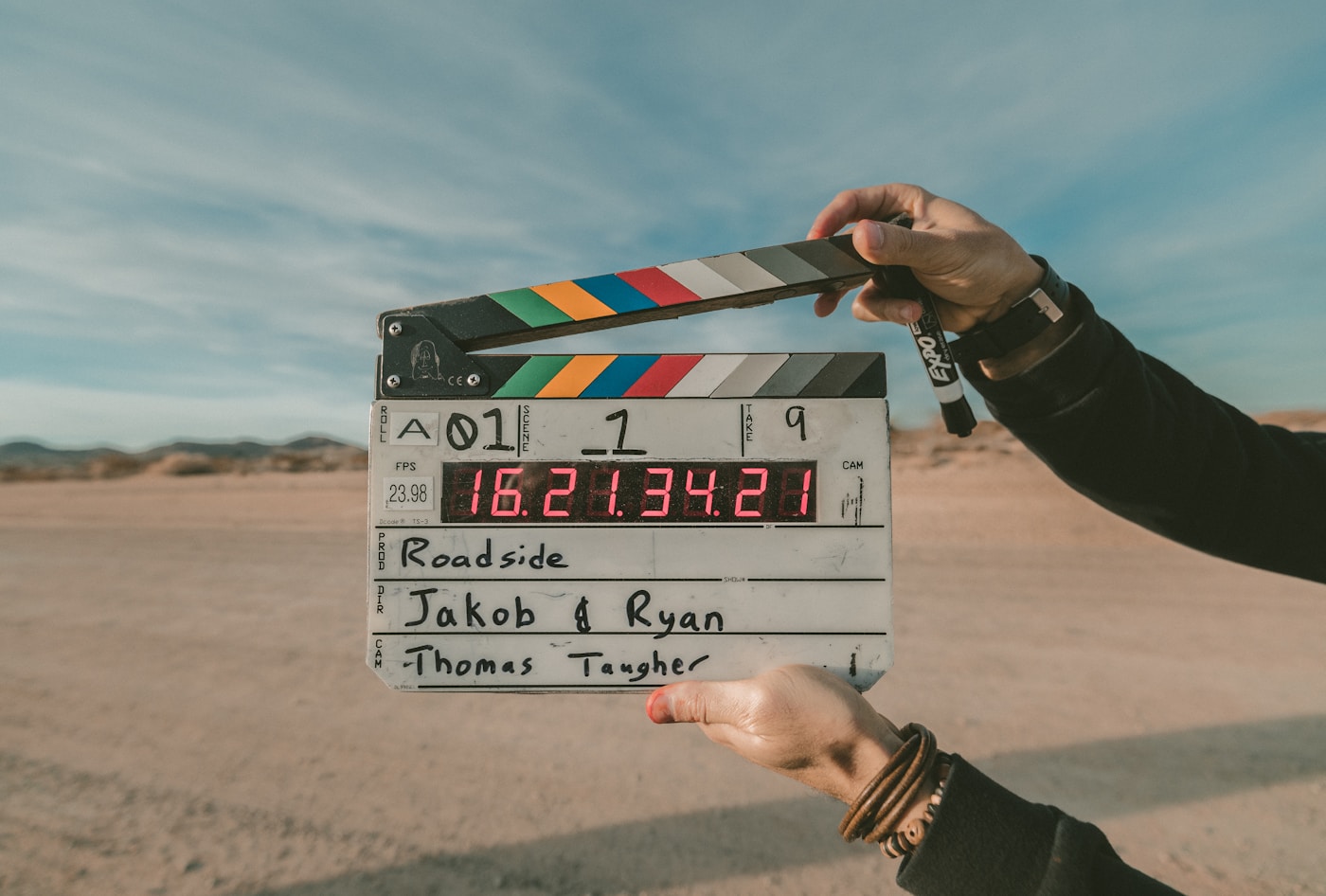
A failed corporate portrait falls into the boring talking head cliché. A successful portrait creates lasting audience connection. The difference rests on 7 concrete rules refined over 200+ portraits — for HEC, CNRS, Dior, CNP.
Contents
Why portrait is one of the hardest formats
At first glance, simple: one person, one camera, some questions. In reality, it's one of the formats where everything plays out in pre-production. The shoot only reveals what was prepared upstream.
The failed portrait always has the same problem: the person recites what they want to say, instead of telling what they live. The result is flat, soporific, forgettable.
The 7 rules that follow avoid this trap. They apply to executive, expert, researcher, entrepreneur portraits. Externally they seem obvious — but 90% of corporate portraits ignore them.
The 7 rules to respect
1. Film in the person's own space
Not in a neutral studio. The researcher's office, the entrepreneur's workshop, the executive's meeting room. The setting tells a story. Without dialogue, we already understand 30% of the character.
That's what we do for CNRS portraits: we film scientists in their laboratory. The workbench, equipment, blackboard — everything makes sense.
2. Prepare but don't script
Before the shoot: a 30-minute call to understand the journey, sensitive topics, the person's tone. No scripts. No pre-written sentences to say on camera. Otherwise we fall into the robot.
3. Ask open questions
"Why did you choose this path?" rather than "You've worked at X for 5 years, right?" Closed questions generate closed answers. Open questions open stories.
4. Allow silences
When the person finishes their sentence, don't jump in immediately. Leave 3-4 seconds of silence. The best additions come in these silences — often the most authentic. The person completes, specifies, nuances.
5. Film 90 minutes to use 90 seconds
The classic ratio of a good portrait: 1 usable minute for 60 minutes filmed. Don't be stingy at the shoot. Filming a lot is what affords luxury of choice in editing.
6. Think of sound like image
A portrait with bad sound is invisible — the audience drops off in 10 seconds. Invest in a quality lavalier mic, a sound engineer separate from the cameraman, a controlled environment (no noisy AC, no street window). Sound is 50% of the film.
7. Edit with rhythm, not with everything
In editing, don't keep everything. Cut hesitations, repetitions, soft sentences. Keep the essential. A 90-second portrait is better than a 4-minute portrait in 95% of cases.
Preparation: what we do with the person before shooting
Here's our pre-portrait checklist, validated over 6 years of productions.
- 30-minute call 1 week before shooting: understand the journey, identify 4-5 strong anecdotes.
- Short written brief sent to the person: no exact questions (they'd write their answers), just the themes we'll address.
- Wardrobe advice: avoid fine stripes, vibrant patterns, pure white, bright green. Prefer solid colours, matte fabrics.
- Site visit beforehand if possible: spot the light, identify shooting angles.
- Prepare a hot/cold drink on the day — the person will be nervous at first, comfort helps.
This preparation takes 2-3 hours studio-side. It multiplies the final result quality by 3.
5 frequent mistakes that ruin a portrait
- Shooting in a neutral studio with white background. Total cliché. The portrait becomes anonymous, interchangeable.
- Asking the person to "look at camera". Forcing eye contact creates discomfort. Better: the person looks at the off-camera interviewer (documentary style).
- Having the person repeat "failed" sentences. Loss of all spontaneity. Better: let it flow, we'll choose in editing.
- Over-makeup of the voice. Voice-over added over, sound effects, loud music. Discredits. Let the voice carry.
- Wanting to say everything in 4 minutes. The portrait is not a video CV. It must reveal one strong facet, not paint a complete panorama.
Three examples of portraits that work
HEC Stand Up — Female entrepreneur portraits
Format: portrait in the workplace (store, workshop). Duration: 1'30 to 2'. Audience: HEC students hesitating to start a business. Effect: next cohort recruitment up 40%. View case →
CNRS — Award-winning researcher portraits
Format: scientist in their lab, talks about their work. No forced popularisation. Duration: 2-3 min. Audience: medals and general public communication. Reused by specialist media. View case →
Dior — Perfumer portraits
Format: Francis Kurkdjian in his laboratory, talks about his perfumer's craft. Duration: 1-2 min. Audience: international internal communications. The seriousness of the subject allows a sober production, without overkill. View case →